What Drives a Home’s Price?
Builders need a lot of information to arrive at an accurate number
Every now and then, a homeowner calls to ask how much a new home costs per square foot. The honest answer: it depends. While square-foot pricing can be a useful starting point, custom home pricing is shaped by a long list of variables- some obvious, some easy to miss.
Most people understand the home-specific differences. In a custom home, the architectural design and finish selections (siding, trim, fixtures, and more) are driven by homeowner choices and are unique to each project.
But those aren’t the only factors that influence the final number.
The big variables beyond the home itself
There are also major cost drivers outside the homeowner’s control- especially those tied to the building site and the rules of the area.
One factor is where the home will be built. Two identical home plans can have very different budgets if the lot conditions and local requirements vary enough. Even if not all of these apply to you, understanding the analysis behind a price estimate helps set realistic expectations.
Lot conditions that change construction costs
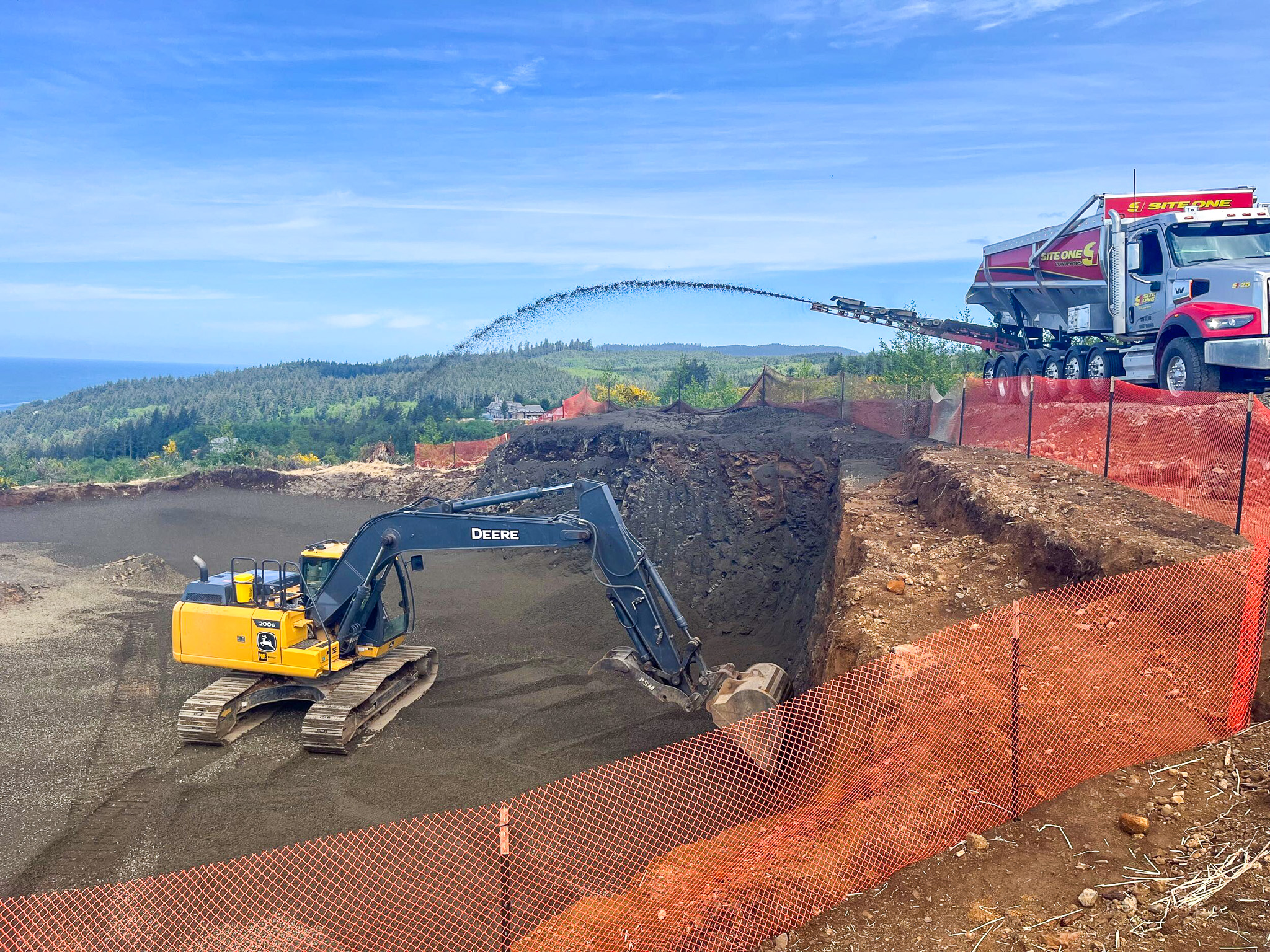
Some lot conditions are easy to spot. For instance, it typically costs more to build on a slope than on a flat lot. A hillside home may allow for a walk-out basement, but it usually requires more excavation and a more complex foundation. A steep slope may also require an engineer’s survey- something that may be worth doing before purchasing the lot.
What’s beneath the ground matters too. Soils and subsurface conditions can vary widely, even within the same town. Foundation costs depend on whether you’re building on clay, rock, or sand, along with how close the water table is to the surface.
Regulations, permits, and local services
Nature isn’t the only culprit behind lot-related costs. Some of the biggest budget impacts come from regulations and required services.
Permits and compliance
Permit requirements vary by jurisdiction, and so do fees. The National Association of Home Builders estimates that the cost of complying with government regulations has risen by about 30% in the past five years. In general, permit fees and compliance costs tend to be higher in urban areas than in rural ones.
Utilities and connection fees
Utilities can be a major variable as well. Some cities charge tens of thousands of dollars for water taps alone. In less developed areas, fees may be lower, but you may need a well and septic system.
Even when utilities are nearby, you might need a long trench to bring water, sewer, and electrical service to the house. These costs can put a real dent in the budget, so if you’re still shopping for property, it’s wise to get estimates before you buy.
HOA requirements can add cost

If your lot is in a community governed by a homeowner association (HOA), covenants and architectural guidelines can influence pricing. For example, requirements for a certain percentage of natural or manufactured stone siding can increase material and labor costs.
Why “cost per square foot” isn’t enough
The bottom line: you can’t get an accurate price without understanding the variables imposed by home design, lot conditions, utilities, government requirements, and HOA guidelines.
If someone gives you a square-foot cost over the phone without considering these factors, it’s smart to listen with a healthy dose of skepticism.
|


-Winsome Construction is a custom luxury home builder, crafting high-performance homes throughout Portland, Bend, the Willamette Valley, and the North Oregon Coast. We invite you to stay connected with us by subscribing to our monthly newsletter (enter your name and email below) or calling us today at 503-472-7402.
Categories: Custom Homes, Newsletter, Value and Costs