Radiant Floor Heating – Winsome Construction
Radiant Floor Heating
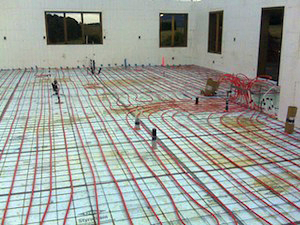 Radiant heating has a number of advantages: it is more efficient than baseboard heating and usually more efficient than forced-air heating because no energy is lost through ducts. The lack of moving air can also be advantageous to people with severe allergies. Hydronic (liquid-based) systems use little electricity, a benefit for homes off the power grid or in areas with high electricity prices. The hydronic systems can also be heated with a wide variety of energy sources, including standard gas- or oil-fired boilers, wood-fired boilers, solar water heaters, or some combination of these heat sources.
Types of Radiant Floor Heat
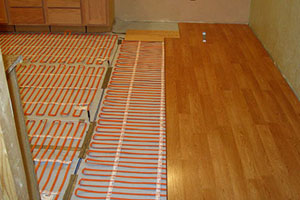
Electric Radiant Floors: Electric radiant floors typically consist of electric cables built into the floor. Systems that feature mats of electrically conductive plastic are also available, and are mounted onto the subfloor below a floor covering. Because of the relatively high cost of electricity, electric radiant floors are usually only cost-effective if they include a significant thermal mass, such as a thick concrete floor, and your electric utility company offers time-of-use rates. Time-of-use rates allow you to “charge” the concrete floor with heat during off-peak hours (approximately 9 p.m. to 6 a.m.). If the floor’s thermal mass is large enough, the heat stored in it will keep the house comfortable for eight to ten hours, without any further electrical input (particularly when daytime temperatures are significantly warmer than nighttime temperatures). This saves a considerable number of energy dollars compared to heating at peak electric rates during the day.
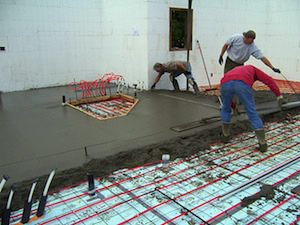 Hydronic Radiant Floors: Hydronic (liquid) systems are the most popular and cost-effective radiant heating systems for heating-dominated climates. Hydronic radiant floor systems pump heated water from a boiler through tubing laid in a pattern underneath the floor. In some systems, the temperature in each room is controlled by regulating the flow of hot water through each tubing loop. This is done by a system of zoning valves or pumps and thermostats. The cost of installing a hydronic radiant floor varies by location and also depends on the size of the home, the type of installation, the floor covering, remoteness of the site, and the cost of labor.
Air-Heated Radiant Floors: Because air cannot hold large amounts of heat, radiant air floors are not cost-effective in residential applications, and are seldom installed. Because of the inefficiency of trying to heat a home with a conventional furnace by pumping air through the floors, the benefits of using solar heat during the day are outweighed by the disadvantages of using the conventional system at night.
Floor Coverings
Ceramic tile is the most common and effective floor covering for radiant floor heating, as it conducts heat well from the floor and adds thermal storage because of its high heat capacity. Common floor coverings like vinyl and linoleum sheet goods, carpeting, or wood can also be used, but any covering that helps to insulate the floor from the room will decrease the efficiency of the system.

Article Credit: U.S. Department of Energy, Energy Efficiency & Renewable Energy